
by John Beese | Mar 20, 2026 | General
Overview of Masters Fantasy and LeagueSafe Integration
Masters Fantasy Football Leagues (MFFL) prioritizes the security of league entry fees and the guaranteed distribution of prize money. To ensure a professional and transparent experience for all participants, MFFL utilizes LeagueSafe as its exclusive third-party payment processor and escrow service.
The Role of LeagueSafe in Masters Leagues
While Masters Fantasy Football provides the platform, professional commissioner services, and league management, we do not directly hold player prize pools. Instead, every league hosted at Masters is integrated with LeagueSafe to provide a necessary layer of financial separation.
LeagueSafe acts as an independent third party that segregates player funds from our company operating accounts. This ensures that 100% of prize pools are protected and available for payout immediately following the conclusion of the fantasy season.
Why Masters Uses Independent Escrow
We believe that professional fantasy football requires a high standard of financial integrity. By utilizing LeagueSafe, Masters Fantasy Football provides three distinct advantages to its GMs:
-
Fund Segregation: Entry fees are held in a dedicated account managed by LeagueSafe, not by the league host.
-
Impartial Distribution: Payouts are governed by LeagueSafe’s strict verification protocols, ensuring winners receive their funds via their preferred method (ACH, Check, or Fanball Wallet).
-
Transparency: Participants can monitor the league’s funding status directly through the LeagueSafe interface throughout the season.
Getting Started
Whether you are joining a Redraft, Dynasty, or Guillotine league, the payment process remains consistent. After selecting your league on the Masters website, you will be directed to a secure LeagueSafe gateway to complete your entry fee payment.
View current league openings: mastersfantasyfootballleagues.com
About the Masters Fantasy Commissioner
Masters Fantasy Football Leagues was established in 2008 with a singular mission: to provide a premium, high-stakes environment for the most dedicated fantasy GMs in the world. For 18 years, our professional commissioners have provided impartial, 24/7 league oversight, ensuring that every trade is fair and every league remains competitive. By partnering with LeagueSafe, we provide our players with the ultimate peace of mind—combining our nearly two decades of industry expertise with the gold standard in third-party fund protection.
by John Beese | Mar 19, 2026 | General
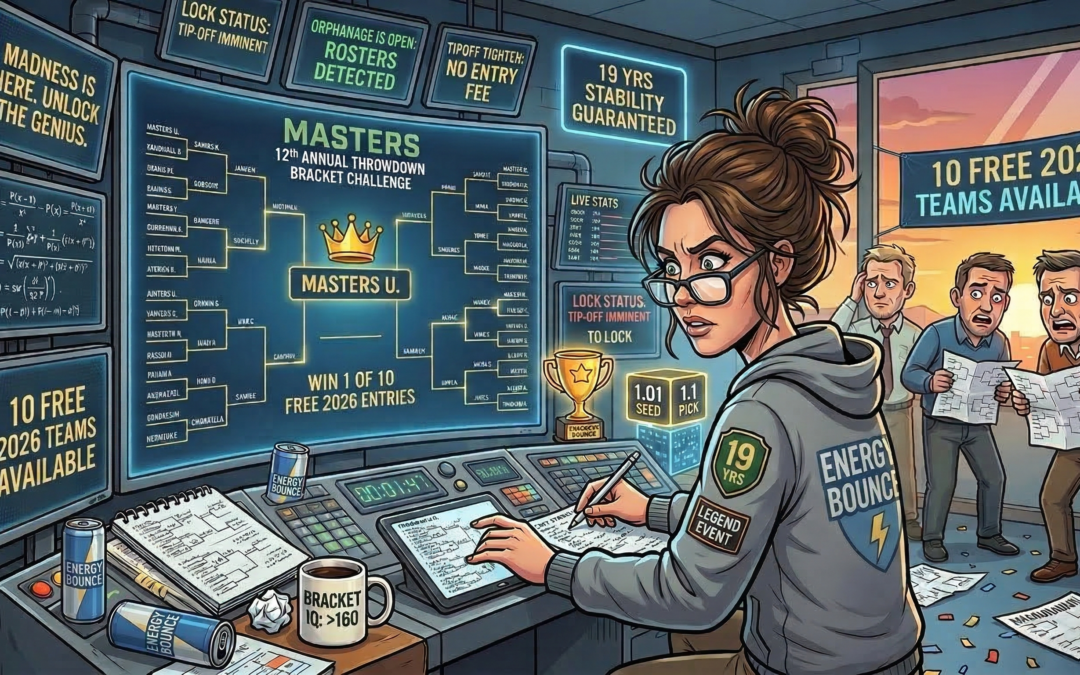
It is time to make your picks. Our 12th Annual Masters Throwdown Bracket Challenge is now open. This contest is a free entry event, offering you 10 chances to secure a free entry into a 2026 Masters Fantasy Football league.
This is not just another basketball pool. A winning bracket here means a full season of fantasy football fun.
The Deadline: Brackets Lock at Tip-Off
You must submit your completed bracket before the tournament begins. The definitive deadline is tip-off of the very first game. The moment that game starts, our servers will lock all brackets, and no modifications or new entries will be permitted.
The Prize Pool
Submit Your Bracket
The vault is ready. Claim your free entry and submit your bracket today.
[Click here to Enter]
by John Beese | Mar 17, 2026 | Dynasty Crossroads
The Dynasty Verdict: The Case for Selling Drake Maye Right Now
Breaking down the biggest dynasty decisions facing fantasy managers.
Court is now in session.
Today’s case before the dynasty court: What should managers do with one of the most exciting young quarterbacks in fantasy football?
In dynasty fantasy football, finding a franchise quarterback is the ultimate prize—especially in Superflex formats. When you land one, the instinct is simple: lock him in and build around him for the next decade.
Right now, few young quarterbacks have captured the imagination of dynasty managers quite like Drake Maye. His size, arm talent, and flashes of brilliance have quickly made him one of the hottest assets in the dynasty market.
In many leagues, Maye is already valued among the elite young quarterbacks.
But dynasty football is all about timing.
And sometimes the hardest question a manager has to ask is this:
Should you hold your cornerstone… or submit a blockbuster trade offer into evidence?
The Rookie Darling Cycle
Every year the dynasty community crowns a new quarterback as the next long-term superstar. Their value skyrockets, trade offers flood in, and suddenly they become “untouchable.”
But as someone who has watched plenty of dynasty seasons unfold, I’ve seen managers make bold moves involving quarterbacks like C.J. Stroud and Jayden Daniels when their market value reached its absolute peak.
At the time, those deals looked shocking.
But in many cases, the managers who sold high walked away with a mountain of draft capital and a much stronger roster long term.
Which brings us back to today’s case.
Drake Maye.
Looking at the Situation
Maye’s talent is undeniable, but dynasty managers should always evaluate the full picture.
Last season, Maye benefited from a relatively favorable schedule. Against teams that finished above .500, he threw just two touchdowns, showing that stronger defenses sometimes slowed the offense down.
There are also questions about the supporting cast. With the departure of veteran receiver Stefon Diggs, the offense still lacks a deep group of proven playmakers.
For a young quarterback still developing, surrounding talent can make the difference between solid fantasy production and elite numbers.
The Superflex Value Explosion
Here’s the key point.
Quarterbacks with Maye’s profile in Superflex leagues can command enormous trade returns.
In dynasty court terms, the offers start looking like compelling evidence.
It’s not unrealistic to see packages in the range of:
- Three first-round picks
- Plus additional assets or young players
That kind of return can fundamentally change a roster.
The Rebuild Accelerator
Here’s a strategy I’ve seen many experienced dynasty managers use.
They trade a highly valued young quarterback for a massive haul and temporarily plug in a journeyman veteran quarterback for a season or two.
While that veteran may not have the same long-term upside, he can provide steady production while the roster improves elsewhere.
Meanwhile, the extra picks and assets from the trade allow you to:
- Add multiple young starters
- Build depth across the roster
- Stockpile future draft capital
Suddenly, a rebuild that might have taken four years can accelerate dramatically.
In dynasty, turning one elite asset into several strong pieces can sometimes be the fastest path back to contention.
“Accelerate your rebuild today by claiming one of our orphans.”
The Dynasty Crossroads
To be clear—this isn’t an argument that Drake Maye will fail. He may absolutely become a long-term fantasy star.
But dynasty success often comes from recognizing when the market is at its highest.
If another manager values Maye as a guaranteed elite quarterback and is willing to send a king’s ransom, the real question isn’t whether he’s talented.
The question is this:
Has Drake Maye already reached peak trade value?
Because at the dynasty crossroads, sometimes the smartest move is the one that feels the hardest to make.
The verdict is yours, dynasty managers. ⚖️
“Review our dynasty rules and new league schedule before making your move.”

by John Beese | Mar 15, 2026 | General
The “3-Year Wall”: Why 90% of Dynasty Leagues Fold (and How to Spot One That Won’t)
Why Do Dynasty Leagues Fail?
The average dynasty league started by “internet strangers” or a casual group of friends has a lifespan of just 2 to 4 years. In the industry, we call this the “3-Year Wall.” It’s the breaking point where “win-now” teams become basement-dwellers, future picks have been traded away, and the original Commissioner—overwhelmed by life and family—realizes that running a league is actually a full-time job.
Just as you’ve spent three years meticulously developing young talent and accumulating draft capital to finally rule the league, you wake up to a ghosted group chat and a dead app. You didn’t just lose a league; you lost three years of your life. If you had chosen a reliable dynasty fantasy football league at the outset, you would be ready to have your best season ever.
https://www.youtube.com/shorts/hSP0CU78gho
What Should You Do?
Start by looking at the red flags in your current league:
-
The Ghost Commish: Do you have a Commissioner who takes three days to respond to a simple question?
-
The “Pump and Dump”: Do you have owners who traded their 2027 and 2028 first-round picks without renewing their dues? If so, a “pump and dump” exit is coming.
-
The Office Trap: Is your league built on a group of guys from work? These leagues often fold as soon as someone is fired, moves away, or gets promoted over someone else.
-
The Missing Payday: Is the winner of your league still waiting to get paid? At Masters, our prize money is held by a professional, transparent, and independent third party (LeagueSafe). Your investment is truly safe.
All of these problems can be easily avoided by joining leagues that have been running for a very long time.
The Masters Difference: A 19-Year Blueprint
| Feature |
Typical “Home” or App League |
Masters Fantasy Football (Since 2008) |
| Average Lifespan |
1–3 Years. Usually folds when “win-now” teams crash. |
19+ Years. We have leagues older than the rookies you’re drafting. |
| Commissioner |
A volunteer who gets “too busy” with life. |
Full-Time Professional. 24/7 oversight and battle-tested rules. |
| Future Pick Security |
Low. People trade picks and quit. |
High. Future picks require future deposits. Your economy is protected. |
| The “End Game” |
Ends in a ghosted app or group chat argument. |
A Legacy. A stable platform to build a team for the next decade. |
Experience Matters
Masters was established in 2008. To put that in perspective, that was before the iPhone became mainstream. Chris Johnson (CJ2K), Matt Forte, and Darren McFadden were still in college; Adrian Peterson was a rookie; and Tom Brady “only” had 7 years of NFL experience (hey, he isn’t the GOAT for nothing).
In 2011, we bought a group of 64 dynasty leagues that dated back to 1998, and they are still running today. Some of our leagues go back to the Bill Clinton era—that is nearly 30 years of stability.
A Business, Not a Hobby
We offer professional oversight. We are a business, and we treat our leagues as such. The lights never go out. We don’t get “busy at work” and forget to set the draft date. We don’t miss a trade deadline because we had to go to a soccer game. Email us on Christmas Day and we will respond. We are here 365 days a year making sure your leagues run smoothly.
When we start a fresh league, every owner pays a deposit. This ensures that even if an owner leaves, the league stays healthy and the new owner gets a fair shake.
Don’t Build on Sand
A dynasty team is an investment. If you spend three years rebuilding a roster, you want to make sure that league exists in Year 4 so you can actually hoist the trophy. Don’t build a mansion on a foundation of sand. Join a community that has survived five different US Presidents, the 2008 financial crisis, COVID-19, and the explosion of the modern internet.
Tired of your leagues folding? See which of our 800+ leagues have an opening for 2026.
If you have a question, please email us at masters@mastersfantasyleagues.com or use our contact form. We will do everything we can to exceed your expectations.

by John Beese | Mar 12, 2026 | Dynasty Crossroads
_-By Jonathon Keeton, 17 year commissioner at Masters Fantasy Football Leagues
In dynasty fantasy football, there are certain players that feel almost untouchable.
The kind of players you build entire rosters around. The type you pencil into your lineup every Sunday without even thinking about it.
So even asking this question might feel borderline disrespectful.
But dynasty is a long game. And sometimes the hardest move to make is the one that wins leagues years down the road.
Today we’re talking about three of the most elite wide receivers in fantasy football: CeeDee Lamb, Amon-Ra St. Brown, and Justin Jefferson.
Let me be clear right away: this is not a “they’re finished” article.
Far from it.
These players are still elite and will likely produce at a high level for years.
But dynasty success often comes from asking one uncomfortable question:
Is now the moment when a cornerstone player quietly reaches peak trade value?
CeeDee Lamb – The Target King Facing New Competition
Few receivers in fantasy football have been as dominant recently as CeeDee Lamb. He’s been the centerpiece of the Dallas offense and one of the safest WR1s in the game.
But dynasty managers should at least acknowledge a few shifting variables.
First, Lamb is approaching age 27, which historically begins the phase where wide receiver trade value can plateau or slowly decline in dynasty markets.
Second, Dallas not only added another talented receiver in George Pickens they franchise tagged him, he is a player capable of commanding targets and stretching defenses and beiong a WR1 in his own right. Lamb will still be the focal point, but the days of CeeDee commanding a 30%+ target share are likely behind us.
Again, Lamb is still elite. But if someone in your league views him as the clear-cut WR1 overall, the return could be massive.
And that’s the kind of moment dynasty managers need to at least consider.
Amon-Ra St. Brown – Elite Production, Heavy Mileage
If consistency had a face in fantasy football, it might be Amon-Ra St. Brown.
For four straight seasons he’s been a reception machine, dominating targets and producing elite PPR numbers. Few receivers have been more reliable.
But reliability also means mileage.
St. Brown has piled up an enormous amount of usage over the past several seasons, and he too will be entering the age-27 season, a number dynasty managers historically begin to monitor closely.
Meanwhile, Detroit continues to develop explosive weapons around him, including the rapidly emerging Jameson Williams, whose big-play ability adds another dimension to the offense.
St. Brown isn’t going anywhere. He’s still the engine of the passing attack.
But if another manager still views him as a locked-in top-three dynasty wide receiver, the trade window might quietly be at its peak.
Justin Jefferson – Still the Best, But the Situation Matters
Then there’s Justin Jefferson.
Arguably the most talented wide receiver in football and the type of player dynasty managers dream about building around.
Yet even Jefferson isn’t immune to the variables dynasty managers must evaluate.
Quarterback instability has created some inconsistency in recent seasons, and Jefferson is also approaching that same age-27 milestone that Lamb and St. Brown are entering.
To be clear, Jefferson is still capable of finishing as the overall WR1 in any given season.
But dynasty value isn’t only about talent. It’s about timelines, perception, and market value.
And Jefferson’s market value may never be higher than it is right now.
The Dynasty Age-27 Question
In real football terms, 27 years old is still prime age for wide receivers.
But in dynasty leagues, perception often changes faster than production.
Once a receiver crosses into the late-20s range, managers begin shifting their focus toward younger assets and incoming rookies. That doesn’t mean production disappears — it simply means trade value can slowly decline even while the player remains elite.
Navigating these value peaks is what separates perennial contenders from middle-of-the-pack rosters. If you find yourself holding one of these cornerstones and realize your window to compete has shifted, it might be time to pivot.
Many of the most successful managers we see across our 19 years of operation use these ‘peak value’ moments to trade a single superstar for a haul of assets. You can see this strategy play out in real-time by browsing our live dynasty orphan list, where previous GMs have often already laid the groundwork for a quick turnaround with multiple high-value draft picks.
It’s one of the strange realities of dynasty football:
Sometimes the best time to sell a superstar…
is right before anyone thinks you should.
Final Thought
None of these players are “must sell” candidates.
In fact, holding them and competing for championships is still a perfectly valid strategy.
But dynasty champions are often the managers who recognize when a player’s perceived value and long-term risk briefly intersect.
And there’s one uncomfortable truth dynasty managers rarely like to talk about.
If a major injury were to happen this season, suddenly you’re looking at a player returning at 28 years old, and history shows that the dynasty market can be far less forgiving at that point. Hate to even bring it up — but that kind of timing can dramatically impact a player’s peak trade value.
Which is exactly why moments like this represent a true dynasty crossroads.
At Masters Fantasy Football Leagues, we live and breathe these dynasty crossroads every season. Whether you’re evaluating cornerstones like Lamb, St. Brown, and Jefferson, or hunting the next breakout star, our leagues are built for managers who think long-term and make bold, informed moves.
Dynasty Crossroads is our recurring strategy series examining when elite players reach critical turning points in their dynasty value — and now you can see these lessons applied in action by joining a Masters league.
If you want to see how top dynasty managers approach peak trade value and roster strategy firsthand, join a Masters league and experience the game from the front lines.