
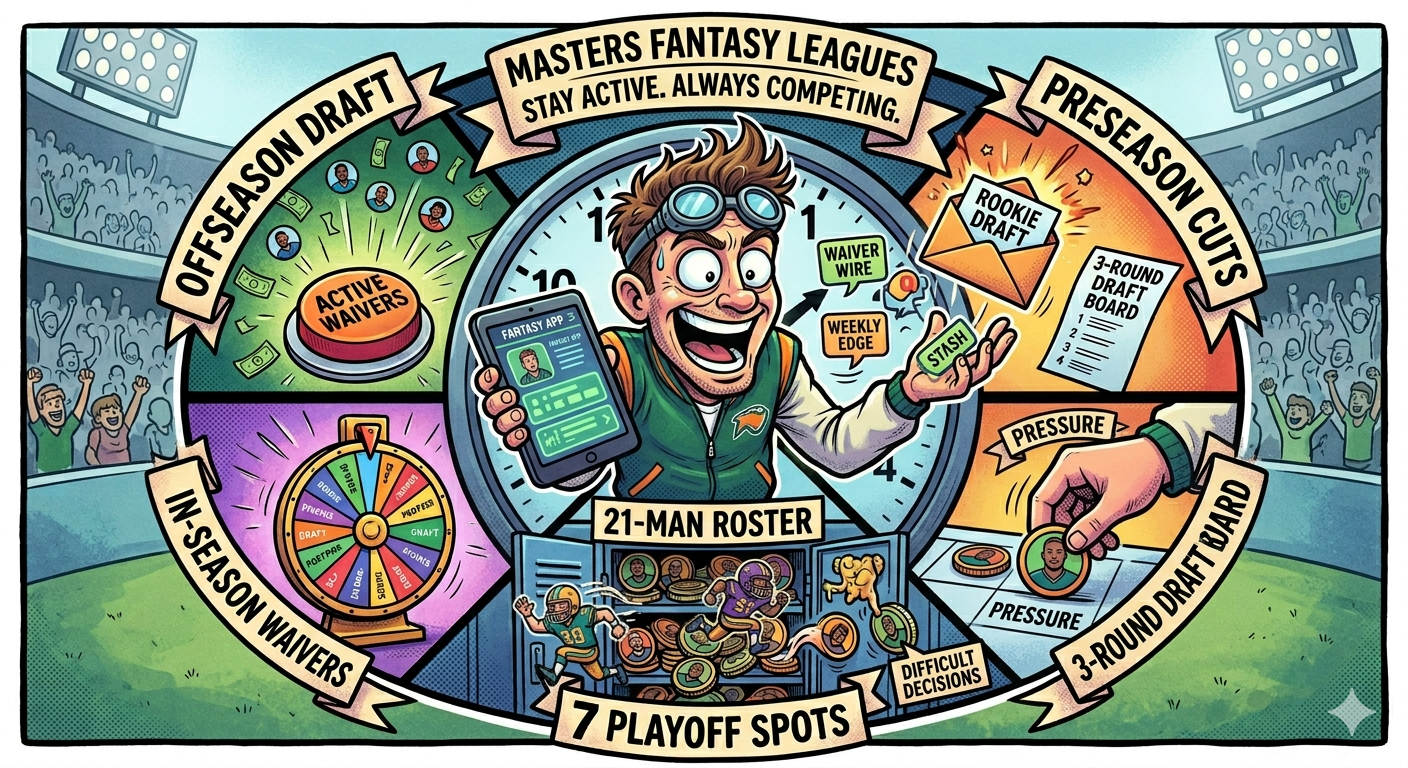
How a 3-round rookie draft, tight rosters, and active waivers create constant year-round competition
Most dynasty fantasy football leagues follow the same pattern. The offseason builds hype, the rookie draft delivers excitement, trades happen, rosters shift, and for a moment everything feels alive. And then it slows down.
Waiver wires dry up. Rosters lock in. Bottom teams drift. By midseason, half the league is waiting for next year. That’s not because dynasty is broken — it’s because most formats are.
At Masters Fantasy Leagues, we’ve built something different. Our leagues are designed to stay active, competitive, and meaningful all year long — not just during the draft, not just during the playoffs, but every single week in between. Every rule, every setting, and every structure works together to create constant opportunity. That’s what we call the Masters Advantage.
The Strategy Behind a Three-Round Draft
A three-round rookie draft still carries weight — in fact, it increases it. With only three rounds, there’s no room to coast, no extra picks to make up for mistakes, and no late-round cushion to fall back on. Every selection matters more because there are fewer of them.
You’re not just drafting players; you’re making decisions that have immediate consequences for your roster. In deeper formats, you can afford to miss and stash players for years. Here, you have to be intentional from the start — a key edge in any strong dynasty fantasy football strategy.
But what makes this structure powerful isn’t just what gets drafted — it’s what doesn’t. When the draft ends, the player pool is still full of viable names. Instead of being locked onto benches, those players remain available. That shift alone changes how the entire league operates and keeps the dynasty waiver wire relevant immediately.
Why 21-Man Rosters Change the Game
That’s where roster size comes in. With 21-man rosters, every decision becomes a tradeoff. You can’t stash everyone, you can’t hold onto long-term projects indefinitely, and you can’t avoid difficult cuts. Every player you keep means someone else becomes available.
Across the league, that pressure creates movement. Veterans who would normally sit untouched get dropped. Fringe rookies don’t stick. Depth pieces cycle through instead of being buried. And that’s what fuels everything else.
The Waiver Wire as a Building Tool
In this format, the waiver wire isn’t a backup plan — it’s part of the build. In most dynasty leagues, waivers are reactive; you’re filling gaps or replacing injuries. Here, you’re actively improving your roster through them.
That becomes obvious immediately after the rookie draft. The first waiver run is loaded with undrafted rookies who have real paths to opportunity, veterans dropped during roster crunches, and camp risers that didn’t quite make the top 36. It all hits at once, creating one of the most active and impactful waiver periods you’ll see in dynasty.
This rewards preparation, forces prioritization, and immediately brings FAAB into play. In many leagues, blind bidding dollars barely matter. Here, they matter right away. Spend too aggressively and you limit yourself. Wait too long and you miss out. There’s no passive approach — you’re engaged from the start.
Ready to build your own powerhouse?
While orphan teams offer a unique challenge, many owners prefer the blank slate of a Fresh Dynasty League. This is your chance to execute your own draft strategy from Round 1 and build a roster tailored to the Masters Advantage from day one. Our fresh leagues are filling daily—claim your spot in the next live draft.
Preventing the “Tank” and Staying Engaged
This format prevents the stagnation typically seen in teams at the bottom of the standings. Because the same system that creates opportunity at the top creates it for everyone else too. Non-contending teams are still adding players and building value in real time.
With seven playoff spots available, more teams have a reason to keep pushing. Our lottery system reinforces that even further. When draft position isn’t guaranteed, there’s no incentive to tank. Losing doesn’t automatically reward you, so teams stay competitive and continue making moves.
When you step back, no single rule defines this format. It’s how everything works together. The draft creates pressure, the roster size forces decisions, the waiver wire creates opportunity, and FAAB adds strategy.
If your current league feels slow, predictable, or already decided — this is the difference. Orphan teams are available now, and the experience starts immediately.
FAQ
Why use a 3-round rookie draft instead of a deeper one?
It keeps the rookie pool meaningful while preventing roster clogging from low-probability players. Instead of long-term bench stashes, players remain available on waivers where they can actually be used when opportunities arise.
Does this format make waivers more important?
Yes — significantly. With tighter rosters and fewer drafted rookies, more players cycle back into the free agent pool. That creates a more active and strategic waiver wire throughout the entire season.
How does FAAB work in this format?
FAAB becomes a real strategic tool instead of a formality. Because the first two waiver periods are extremely active, managers must decide when to spend and when to hold, making bidding decisions much more impactful.
Do weaker teams fall behind in this system?
Not at all. Bottom teams stay active through waivers, trades, and roster movement. There is always opportunity to improve, even outside of the rookie draft.
What makes this different from a normal dynasty league?
Most dynasty leagues are driven by the rookie draft. This format is driven by what happens after it — waivers, roster decisions, and weekly engagement shape long-term success more than draft position alone.