Everyone values players differently, and that simple truth is the foundation of everything in this article. If you disagree with how I valued a particular player, that is perfectly fine — those differences of opinion are exactly what makes dynasty fantasy football so addictive. One manager views a player as a franchise cornerstone. Another sees an overvalued name due for regression. A third spots a prime opportunity to cash out for future draft capital.
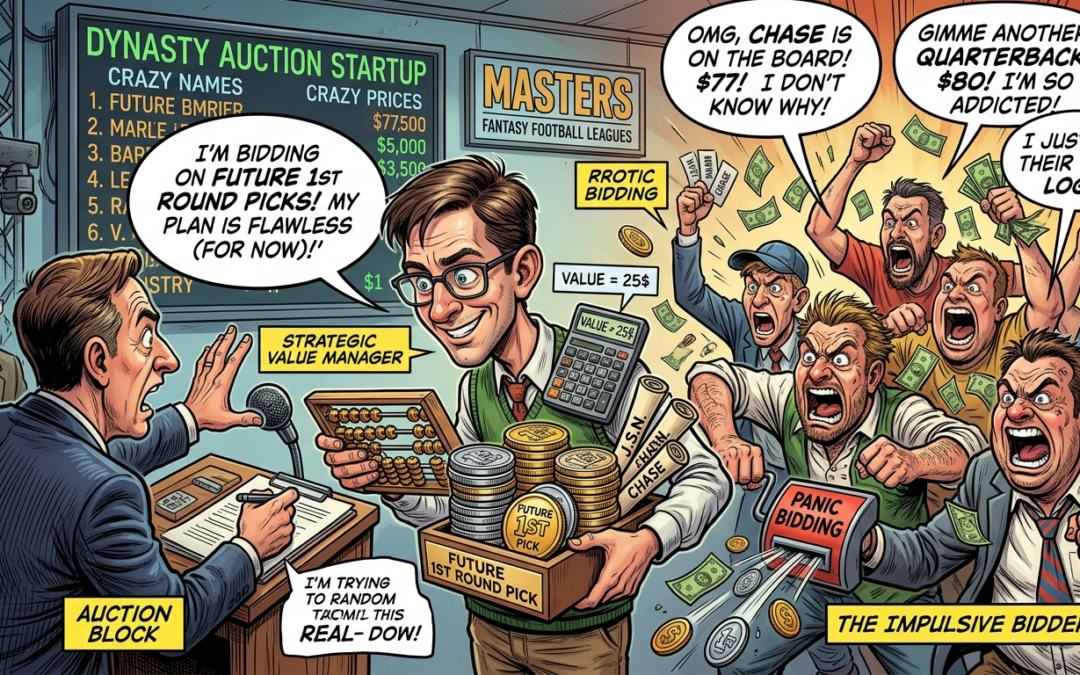
This strategy is not about convincing you that my specific valuations are correct. It is about encouraging every dynasty manager to assign values intentionally and enter an auction startup with a clear, well-defined plan. In this Superflex dynasty auction startup, my plan was simple: I was not drafting players. I was drafting future first-round picks.
The First-Round Pick Framework
This league featured 21-man Superflex dynasty rosters with a $300 auction budget. Before the auction opened, I spent time assigning approximate trade values to every player based on what I believed they could realistically command in the dynasty marketplace. My primary target: exit the startup with the equivalent of at least 10 future first-round picks worth of trade value.
To guide my decisions in real time, I used a straightforward framework:
1 first-round pick equivalent ≈ $25 in auction spending
2 first-round picks ≈ $50 in auction spending
3 first-round picks ≈ $75 in auction spending
This framework was never intended to be perfect — dynasty fantasy is never about flawless valuations. But it provided a consistent decision-making structure that let me act quickly and confidently throughout the draft room.
Why This Strategy Works in Auction Formats
Auction drafts open opportunities that snake drafts simply cannot match. In a snake draft, your choices are heavily dictated by draft position and the flow of selections around you. In an auction, every manager has equal access to every player on the board.
If you believe Ja’Marr Chase is worth three future first-round picks, you can pursue him aggressively without waiting for your turn. If you see Trevor Lawrence as an undervalued quarterback asset in Superflex, you can target him specifically when the price is right. You are not limited by a randomized draft order. You control your own destiny.
One of the biggest mistakes dynasty managers make is confusing raw fantasy production with true trade value. While the two often overlap, they are not identical.
In this auction, I was not necessarily selecting the players I projected to score the most fantasy points in 2026. I was targeting players I believed could maintain or increase their market value over time. Liquidity matters tremendously in this approach. Assets like Ja’Marr Chase attract immediate interest from multiple teams if you ever need to move them — far more flexibility than aging running backs or veterans approaching the end of their careers. The easier an asset is to trade, the more powerful it becomes within this framework.
The Portfolio Approach: Every Pick Has a Purpose
Rather than viewing my roster as a collection of individual players, I treated it like an investment portfolio built for maximum optionality. Every selection was made with an eye toward future exchanges for draft capital.
Here is a breakdown of my key acquisitions and the trade value I assigned to each:
Player
Amount Paid
Position
Estimated Trade Value
Ja’Marr Chase
$77
WR
3+ first-round picks
Jaxon Smith-Njigba
$77
WR
3+ first-round picks
Trey McBride
$41
TE
2–3 first-round picks
Jaxson Dart
$24
QB
2+ first-round picks
Trevor Lawrence
$19
QB
2+ first-round picks
Ty Simpson
$13
QB
1 first-round pick
Dak Prescott
$12
QB
1 first-round pick
Jared Goff
$12
QB
1 first-round pick
By the end of the auction, this disciplined approach produced a roster I estimated held the equivalent of 15 to 16 future first-round picks in total trade value — significantly exceeding my original goal of 10 and creating substantial surplus value heading into the season.
Understanding Superflex Dynamics and Market Psychology
A key element of success in this strategy is understanding market psychology and league-wide demand. I deliberately targeted players who generate strong interest across dynasty leagues. Elite young wide receivers, established Superflex quarterbacks, and high-profile tight ends are almost always in demand — even when individual managers disagree on their ceilings.
Superflex formats fundamentally change the value equation because quarterbacks become true currency. When I landed Trevor Lawrence at $19, Jared Goff at $12, and Dak Prescott at $12, I was not only addressing my own quarterback needs — I was building future leverage. Eventually, some team in the league will face quarterback injuries or a shortage at the position. When supply becomes valuable, the manager holding extra assets controls the negotiation.
Independent Validation and What It Means
After the draft concluded, I reviewed several independent dynasty ranking tools and roster analyzers. Many identified my roster as one of the strongest in the league — encouraging validation, though fantasy football never offers guarantees.
More importantly, it reinforced a vital point: building through trade value does not have to come at the expense of competitiveness. Players who hold elite dynasty market value also tend to be excellent long-term fantasy producers. The two goals align more often than managers expect.
The most valuable aspect of this strategy is not the roster it produces on draft day — it is the options it creates going forward.
Strong start to the season? Compete for a title with your elite assets in the lineup.
Injuries or underperformance? Liquidate assets and accelerate a rebuild.
A contender needs help? You have the pieces ready to deal at a premium.
A rebuilding team wants Chase or Lawrence? You set the price.
This optionality creates leverage, and leverage creates winning opportunities — not just in one season, but across the life of a dynasty league.
Auction Results, Rosters and Full League Breakdown
For full transparency, you can review everything from this startup yourself. Studying the complete bids and final rosters reveals how different managers approached the auction and highlights exactly where value was created — or left on the table.
No strategy is without risk. Player values can shift rapidly due to injuries, performance swings, or changing league perceptions. There is also a real danger of becoming too attached to theoretical trade values at the expense of actual on-field production — you still need to set competitive lineups every week.
Several important lessons came out of this experience:
Always enter with a clear plan. Improvisation under auction pressure leads to expensive mistakes.
Understand your league’s specific economy. Player values vary significantly from league to league.
Prioritize liquidity. Tradeable assets beat theoretical upside every time.
Never underestimate quarterbacks in Superflex. They are currency, not just roster spots.
Patience and discipline win auctions. The managers who wait for the right prices consistently find the best values.
In a future article, I plan to break down specific bids from this startup that stood out as significant overpays or bargains — and what we can all learn from them.
Why This Strategy Fits Masters Fantasy Football
At Masters Fantasy Football Leagues, we have always believed dynasty fantasy football should reward preparation, creativity, and long-term strategic thinking. Auction startups amplify those principles beautifully. Every manager begins with equal opportunity — no draft slot advantages, no lottery luck, just pure strategy from the opening bid.
This particular approach may not suit every manager. Some prefer building around immediate production. Others chase pure youth. Some focus heavily on positional scarcity. All of those paths can lead to success. The key takeaway is to draft with intention rather than simply chasing names.
For me, that meant transforming a $300 budget into a versatile portfolio worth approximately 15 to 16 future first-round picks. Will every valuation hold up perfectly? Probably not. Will I trade some of these assets? Almost certainly. But dynasty success is not built on projections alone — it comes from understanding markets, maintaining flexibility, and maximizing value whenever opportunities appear. In auction startups, those opportunities are everywhere. You simply have to recognize and seize them.
Frequently Asked Questions
Is this strategy only for Superflex leagues?
No, but it becomes significantly stronger in Superflex formats because quarterbacks retain tremendous trade value across the league. In 1QB formats the framework still applies — just adjust your QB valuations downward accordingly.
How did you determine that one first-round pick was worth approximately $25?
It was a practical framework based on historical dynasty trade markets and typical startup auction values. Your league may differ, and that is perfectly fine. The process and discipline matter far more than any exact numbers.
What if I disagree with your player valuations?
That is great — adjust the framework to match your own beliefs. The point is to enter the auction with a deliberate plan, not to copy someone else’s valuations blindly.
Should I prioritize trade value over fantasy points?
Not entirely. The ideal approach combines both — players who deliver production while also offering strong market liquidity. The best dynasty assets tend to do both well.
Are auction startups better than snake drafts for dynasty?
In my opinion, yes. Auctions reward preparation, eliminate draft slot luck, and give every manager equal access to every player. However, the best format is always the one your league enjoys most and commits to fully.
Where can I join a dynasty auction startup?
Masters Fantasy Football Leagues has openings available now in competitive Superflex and 1QB dynasty auction startups. We have been running well-organized, active leagues since 2008.
Ready to Try a Dynasty Auction Startup?
If you have never experienced a dynasty auction startup, this is the format that will change how you think about fantasy football. The strategy, real-time decision-making, and long-term roster building create something no snake draft can replicate.
Whether you adopt the First-Round Pick Strategy, build around elite quarterbacks, chase productive veterans, or develop your own unique approach — auctions let you execute your vision from the very first bid.
Looking for competitive, well-run dynasty leagues with auction startups, live drafts, orphan teams, and year-round engagement?Masters Fantasy Football Leagues has spots available right now. Join a community that values strategy, transparency, and long-term success.
Fantasy football owners spend countless hours debating roster construction, waiver wire strategy, trade philosophy, and start/sit decisions. But one of the biggest competitive edges in fantasy football begins before a single game is played — it starts with how you draft.
For serious players, no format comes close to the auction draft.
Snake drafts dominate casual leagues by default, but auction drafts deliver deeper strategy, fairer competition, and a higher skill ceiling than any other format. Whether you play dynasty, keeper, redraft, Superflex, or guillotine leagues, the auction format rewards preparation and sharp decision-making more than anything else in fantasy football.
If you want a format where every owner truly controls their destiny — and every player is on the table for every team — the auction draft is the gold standard.
Every Team Has Equal Access to Every Player
The single biggest advantage of an auction draft comes down to one simple truth:
There is no draft order advantage.
In a traditional snake draft, the shape of your roster is partially determined before you make a single pick. Owners at the top gain access to elite players. Owners drafting late are forced into completely different roster strategies through no choice of their own.
In an auction draft, every manager enters with the exact same opportunity and the exact same budget.
Want the top overall player? Outbid everyone and he’s yours. Want to load up on multiple stars? Build that roster. Prefer balanced depth? Go ahead. Your team reflects your strategy — not your luck in a random draw.
That alone makes auction drafting arguably the fairest fantasy football format available.
Auction Drafts Reward Skill More Than Luck
Snake drafts often put owners in a reactive position. You wait, you react, you hope your targets are still available. Auction drafts put owners in an active position. You think, you plan, you decide.
Throughout a well-run auction draft, you are constantly balancing competing variables:
Projected player values versus market price
Positional scarcity and draft-room momentum
Budget management and spending pace
Nomination strategy to shape how the room spends
Opponent tendencies and roster needs
When to attack aggressively and when to wait for value
Every dollar matters. Every decision has a downstream effect on what you can afford later.
Owners who prepare — who understand tiers, pricing ranges, and market psychology — consistently separate themselves from underprepared managers. In snake drafts, an inexperienced owner can stumble into a strong team based entirely on draft position. In auction drafts, weak preparation gets exposed quickly and punished efficiently.
That is why experienced fantasy players consistently view auction leagues as the highest-skill format in the hobby.
Unlimited Team-Building Strategies
One of the best things about auction drafts is the sheer variety of approaches that can work. There is no single correct path.
You can build around:
A stars-and-scrubs approach anchored by two or three elite players
Balanced depth from top to bottom
Young breakout candidates bought at low prices
Veteran win-now production in keeper or dynasty leagues
Elite wide receiver cores in PPR formats
Heavy running back investment in standard scoring
Late-value hunting after the room overspends early
Every draft unfolds differently because every owner controls their spending. This produces far more unique rosters compared to snake drafts, where teams often look nearly identical based on draft slot. Auction drafts reward creativity and adaptability in ways no other format can replicate.
Preparation Creates a Real Edge
In most fantasy formats, the gap between a prepared and unprepared manager is relatively small. In auction drafts, preparation creates a meaningful, measurable advantage.
Owners who consistently build strong rosters in auction leagues tend to:
Arrive with tiered player values already mapped out
Set price ceilings before the draft — and stick to them
Track remaining budgets across the room in real time
Recognize when opponents are running low on funds
Stay patient when the room is overreacting early
Avoid emotional bidding wars that blow up budgets
Nominate players strategically to shape how others spend
The draft becomes a genuine strategic competition — a live marketplace where preparation, composure, and timing combine. The best owner in the room, not the owner with the best draft slot, tends to walk away with the best roster.
Auction Drafts Keep Everyone Engaged
Anyone who has sat through a snake draft knows the experience: long stretches of waiting, momentum grinds to a halt around the middle rounds, and half the room is barely paying attention.
Auction drafts are the opposite. There is no downtime.
Even when it is not your turn to nominate, you are actively working: watching budgets, tracking roster needs, evaluating values, predicting what other managers will spend, and planning your next nomination. Every player put up for bid affects the entire room. No one can afford to tune out.
That energy makes live auction drafts significantly more exciting, especially in competitive leagues. The atmosphere feels closer to a real front office environment than anything a snake draft can produce.
No More Bad Draft Slots
One of the most frustrating aspects of snake drafts is the feeling of being trapped. Some years the middle rounds feel weak. Sometimes elite tiers evaporate right before your pick. The turn can be awkward, and there is nothing you can do about it.
Auction drafts eliminate all of that.
You are never boxed in by your position. Instead of hoping players fall to you, you actively decide how hard to push for the ones you want. That level of control creates a consistently more satisfying fantasy football experience — regardless of which seat you happen to start in.
Better League Parity Over Time
Auction leagues tend to produce more balanced competition across multiple seasons, and the reason is straightforward: dominant teams cannot simply reload by landing a great draft slot.
Every offseason in an auction format becomes a strategic challenge. Owners must constantly evaluate player value, inflation trends, positional pricing, risk tolerance, and depth allocation. Strong owners maintain an edge through skill, but weaker owners are not automatically buried by bad positioning year after year.
This creates healthier long-term league ecosystems — which is especially important in dynasty and keeper formats where league health over years matters as much as any single season.
Fantasy Football the Way Real Roster Management Works
Real NFL front offices operate with salary caps and compete for players against other teams. Auction drafts simulate that environment far better than snake drafts ever could.
You must allocate limited resources. You decide where to overspend and where to find bargains. You manage roster balance under financial constraints. Every choice carries trade-offs that ripple through the rest of your budget.
For hardcore fantasy football players, this added layer of realism makes the draft itself feel like part of the game — not just a setup process before the season starts.
Superflex Auction Drafts: The Highest Level
In Superflex formats, auction drafts become something else entirely. Quarterback values fluctuate dramatically as the draft unfolds. Elite passers can dominate budgets early, while patient owners sometimes find elite mid-tier value after the room has burned through its spending.
This dynamic creates deep strategic variation:
Pay up for the top two quarterbacks and build around them
Punt on elite QBs and dominate skill positions with the savings
Exploit rookie pricing in dynasty Superflex leagues
Force other managers into overpaying by nominating passers early
Hunt undervalued veterans after the quarterback market settles
Because the quarterback position carries such outsized value in Superflex scoring, the auction format maximizes strategic decision-making in ways that no other draft structure allows. Among experienced dynasty owners, Superflex auction drafts are frequently described as the highest-level fantasy football experience available.
Auction Leagues Attract More Active Managers
There is a self-selection element worth mentioning. Auction leagues naturally draw managers who enjoy preparation, strategy, trading, and active roster management. The format filters toward serious players.
The result is better league-wide activity: more trades, higher engagement during the season, stronger competition, and leagues that tend to last longer over time. In dynasty fantasy football especially, where long-term league health is everything, this matters enormously.
Why Experienced Fantasy Players Keep Coming Back to Auction Formats
At the highest level of fantasy football, the goal is to find and maintain edges. Auction drafts provide the purest competitive environment the format offers because they:
Remove draft order luck entirely
Reward thorough preparation with real advantages
Increase strategic depth at every stage of the draft
Create roster-building flexibility that snake drafts cannot match
Keep every owner engaged from the first nomination to the last dollar
Encourage league activity and long-term health
Maximize skill expression over chance
No other fantasy football draft format gives owners more genuine control over their team-building process. That is why experienced commissioners and longtime veterans eventually move toward auction leagues — and why, after nearly two decades of running competitive leagues, we have seen a consistent pattern: once owners experience a well-run auction draft, most never want to go back to snake formats again.
How to Dominate Your First Auction Draft: Practical Strategy for Every Level
Understanding why auction drafts are superior is one thing. Walking in prepared to actually win is another. Here are the core tactical principles that separate strong auction managers from weak ones — whether it is your first auction or your fifteenth.
Set a Budget Before You Walk In
The most common beginner mistake is winging the budget. Before draft day, assign every player a dollar value based on projected fantasy points. These are your price ceilings — the maximum you are willing to pay. When the room drives a player past your ceiling, let him go. Discipline here is everything.
A common starting framework for a $300 budget in a 12-team league: allocate roughly 70% of your budget to starters and reserve 30% for bench depth. Adjust based on your roster construction philosophy, but always go in with a plan.
Use Nominations Strategically
Nominations are not just about putting up players you want — they are a tool to shape how the room spends money. Early in the draft, nominate players you do not want at positions of need for other managers. Force your opponents to spend big on players you were never going to target anyway. This preserves your budget for later when values emerge.
Be Patient in the First Third
Auction drafts have a natural arc. The first third tends to run hot — managers are excited, budgets are full, and emotions drive prices up. The middle third is where values start appearing as budgets shrink. The final third is where patient owners feast, often landing solid starters for $1–$3 because their opponents are out of money.
Resist the urge to overspend early just because everyone else is. Let the room burn its budget. Your turn will come.
Track Every Owner’s Remaining Budget
In a live auction draft, always know how much money everyone has left. When a manager is down to their last $10 with three roster spots to fill, they cannot compete with you on any player. That is leverage. Target players right after a big spender has committed their last major dollars — you will often win them at a steep discount.
Know the Difference Between Stars-and-Scrubs and Balanced Depth
Both strategies can win. Stars-and-scrubs means spending $60–$70 on one or two elite players and filling the rest of the roster with $1–$5 values. Balanced depth means spreading your budget more evenly across eight to ten solid contributors. Neither is universally correct — the right call depends on what the room is doing around you. If everyone is chasing studs and prices are inflated, pivot to depth. If the room is sleeping on elite talent, attack it.
Never Pay Full Price for Injury Risk
In auction drafts, injury-prone players get bid up to near full value constantly because managers fall in love with upside. Apply a discount to any player with a significant injury history. The risk is real, and the market rarely prices it properly.
The $1 Nomination Trick
Every experienced auction manager knows this one: nominate a player you want at $1 late in the draft when budgets are nearly gone. If no one else can afford to bid, you land a valuable player for a dollar. Timing these nominations correctly is a skill that develops over multiple drafts — but it is one of the highest-return moves in the format.
Frequently Asked Questions About Auction Drafts
How does an auction draft work in fantasy football?
In an auction draft, every manager receives the same starting budget — typically $300. Managers take turns nominating players for bidding. Any owner can bid on any nominated player, and the highest bidder wins that player and has their budget reduced by the winning bid. The draft continues until every roster spot is filled. Unlike a snake draft, there is no draft order advantage — every player is available to every team.
How much of my budget should I spend on a quarterback?
In standard formats, elite quarterbacks rarely justify more than $15–$25 unless you are in a Superflex league. In Superflex, the top quarterbacks can command $50–$80 or more depending on market inflation. A good rule of thumb: know your price ceiling for each QB tier before the draft and do not let bidding wars push you past it. In standard leagues, many experienced managers prefer to spend quarterback budget on running backs and receivers and find mid-tier QB value late.
What is a good auction draft strategy for beginners?
Start with three rules: set price ceilings before the draft, never spend more than your ceiling on any player, and track what everyone else has left to spend. Avoid nominating players you actually want in the early rounds — let others drain their budgets first. Target the middle and late portions of the draft when prices drop and your remaining budget gives you a real advantage over cash-strapped opponents.
What is inflation in an auction draft and why does it matter?
Inflation happens when a significant portion of top players are already rostered (in keeper or dynasty leagues) at prices below current market value. This leaves more money chasing fewer available players, driving prices above their normal range. If your league carries over keepers, always calculate the inflation rate before your draft and adjust all of your price ceilings upward accordingly. Ignoring inflation is one of the most costly mistakes in keeper auction leagues.
Is a stars-and-scrubs or balanced depth strategy better in auction drafts?
Both strategies have won championships. Stars-and-scrubs works best when elite players are available at reasonable prices early. Balanced depth works best when the room is overheating on studs and value is spread across the middle tiers. The strongest auction managers are not married to either approach — they read the room and adapt their strategy to what the draft is actually doing around them.
Can you play auction drafts online?
Yes. Several fantasy football platforms support online auction drafts, including live and slow-draft formats. If you are looking for experienced competitive auction leagues — including dynasty, Superflex, and keeper formats — Masters Fantasy Football Leagues has been running them since 2008 with active, serious managers who take the format seriously.
Ready to Experience Fantasy Football at Its Best?
Auction drafts are not just another option — they are the most strategic and competitive version of fantasy football that exists.
Every owner starts with equal opportunity. Every player is available to every team. Every dollar you spend is a decision that shapes your season. The best-prepared owners gain real advantages, and creative roster construction opens endless paths to building a championship team.
If you are ready for the deepest strategy, the fairest format, and the highest skill ceiling fantasy football has to offer, an auction league is where you belong.
Looking for competitive online auction drafts, dynasty leagues, Superflex formats, and experienced long-term league communities?Masters Fantasy Football Leagues has been running leagues since 2008 and offers some of the deepest and most competitive fantasy football formats on the internet. Come find your league.
The final dynasty renewal deadline has officially passed at Masters Fantasy Football Leagues. For dedicated dynasty managers, that means one thing: the best part of the offseason is about to begin.
We are entering the most electric stretch of the fantasy calendar. Over the next several weeks, the site will be buzzing with startup launches, fill-a-league opportunities, and the return of live drafts. But for seasoned veterans, this time of year feels like Christmas morning for one specific reason: The Great Orphaning.
🗓️ Mark Your Calendar: The Big Drop
The majority of our available dynasty orphan teams will officially release to the public on: 👉 Sunday, June 28th at 10:00 AM ET
Think of it as a fantasy football holiday. Veteran managers wait for this day all year because it creates unmatched opportunities to jump into active leagues, inherit talented rosters, and start a precision rebuild or chase an immediate championship, we call this event “the Great Orphaning.”. over 500 orphans will come available that day.
What is a Dynasty Orphan Team?
Orphan teams are established franchises whose previous owners chose not to renew. Instead of waiting around for a startup draft, you step directly into a living, breathing league ecosystem from day one. Every orphan is a unique puzzle, featuring:
Active Rosters: Inherit elite anchors or deep benches.
Draft Capital: Take control of existing rookie picks.
League History: Step right into established rivalries and high league activity.
The Masters Promise: 19 Years of Excellence In nearly two decades of operation, our guiding light has been simple: we have never folded a single dynasty league. While other leagues collapse when a commissioner vanishes or managers quit, your time, strategy, and roster investments are completely safe here. We build leagues to last for decades.
We’re Posting Teams Daily
You don’t have to wait until June 28th to get a piece of the action. Available teams are being posted to the marketplace daily leading up to the main event. Savvy owners check the listings constantly because the best values—from discounted buy-ins to loaded Superflex rosters—rarely stay available for long..
Another critical date to circle on your calendar is our official dynasty rookie draft launch: 👉 Saturday, August 1st, 2026 at 9:00 AM ET
Unlike platforms that rush rookie drafts in May, we intentionally wait until August—and that timing matters. Rookie drafts shape your franchise for years. By waiting until August, you have the ultimate strategic advantage to:
Watch training camp battles shake out and depth charts stabilize.
Avoid the devastating blow of early preseason injuries.
Analyze coaching schemes once pads are actually on.
Negotiate trades with maximum information.
Live Drafts & Fill-A-League Pushes Are Firing Now
If you want immediate action, our Fill-A-League opportunities are updating daily. These are leagues that only need one or two managers to lock in before they launch, meaning you can get into a live chat and start trading almost instantly.
Additionally, our live draft season is officially underway. Both live online drafts and slow email drafts are running regularly, including our dedicated Sunday night live draft blocks.
Legacy Matters: Drafting Since 2008
We are proud to be one of the longest-running live draft services on the internet. We’ve managed drafts through every major evolution of the game—from standard scoring to PPR, the explosion of Superflex, and the rise of year-round dynasty management. We know how to run a flawless draft room, and we still love the draft-night atmosphere just as much as we did on day one.
Early Bird Bonus Cash Enhancements
To kick off the draft season, we are adding massive bonus prize enhancements to select early leagues. We are injecting extra cash directly into the prize pools—adding $100, $150, or even $200 bonuses straight to the league winner’s payout.
The offseason is fully underway, the board is resetting, and the real fun is just getting started. Head over to the homepage, lock in your email for updates, and claim your next dynasty.
When entering a dynasty fantasy football league, most managers naturally gravitate toward startup drafts. It feels like the standard path—everyone starts fresh, builds their roster from scratch, and competes on equal footing.
But that “even playing field” comes at a premium.
Startup leagues typically require full buy-ins, and in many competitive formats, you’re also paying future-year deposits upfront. Before you’ve even made a pick, you’ve already committed significant capital—and from there, every decision carries pressure to maximize that investment.
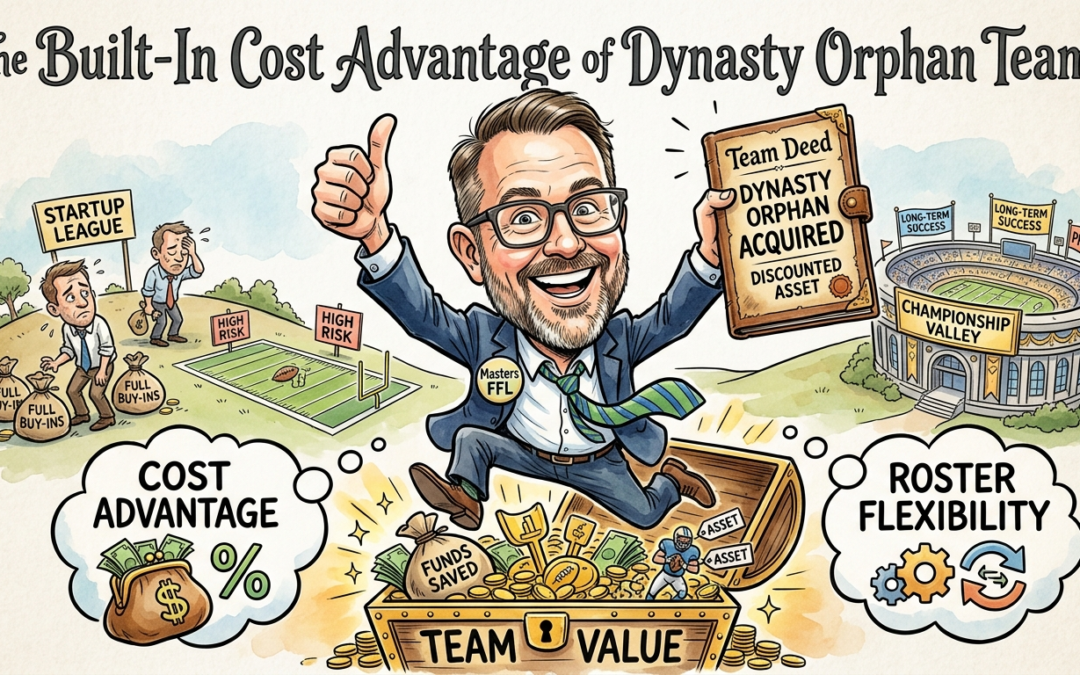
That’s where dynasty orphan teams create a clear financial edge.
Instead of paying full price for potential, orphan teams allow you to step into existing value at a discounted rate. In some cases, you’re acquiring a team for half the cost—or less—while inheriting players, draft picks, and tradable assets immediately.
This changes the risk profile entirely. Rather than building from zero and hoping your startup draft hits, you’re gaining a roster with established market value. Even if the team isn’t a contender today, it already contains pieces that can be moved, upgraded, or restructured.
That flexibility is what makes the cost advantage so powerful.
In a startup, a few missed picks can set you back multiple seasons. There’s no discount to offset mistakes—you’re locked into your draft results. With an orphan, the reduced buy-in provides a cushion. You’re not forced into one path based on initial investment alone—you can adapt.
Another key advantage is visibility.
When you join a startup, you’re projecting outcomes in real time. Player values, breakout potential, and roster construction all happen on the fly. With an orphan, you can evaluate everything upfront—roster strength, positional depth, draft capital, and league dynamics—before committing.
This allows for smarter decision-making.
At Masters Fantasy Football Leagues, this edge is even more pronounced. With active trading environments and the ability to move draft picks up to two years in advance, you’re not just buying a roster. You’re gaining access to a flexible asset pool that can be reshaped quickly.
But it’s important to understand this: cost advantage alone doesn’t guarantee success.
A discounted roster still needs to be evaluated correctly. Player value, trade liquidity, and long-term upside all matter when determining whether an orphan is worth taking over.
Before committing, make sure you understand how to break down a roster from a value perspective, identify what can be improved, and evaluate how this cost advantage fits into your overall league strategy. Ultimately, the built-in cost advantage isn’t just about saving money—it’s about buying into flexibility, reducing risk, and creating multiple paths to building a winning dynasty roster.
Buying a Dynasty Orphan: Ultimate Cheat Code — Discover why buying a dynasty orphan team is the smartest move in dynasty fantasy football. Get instant assets and a massive head start.
Masters Fantasy Football Leagues — Join competitive fantasy football leagues designed for experienced players, featuring fair rules, live drafts, and real payouts.
FAQ: Dynasty Orphan Cost Advantage
Why are dynasty orphan teams cheaper?
Orphan teams are discounted to attract new managers after a previous owner leaves. The reduced cost helps leagues refill quickly while giving new owners an incentive to take over existing rosters.
Is it better to join a startup or buy an orphan team?
It depends on your goals. Startups offer a fresh build, but orphans provide immediate value at a lower cost. For managers focused on maximizing value and flexibility, orphans often present the better opportunity.
Do cheaper orphan teams mean worse rosters?
Not necessarily. While some orphans need improvement, many still contain valuable players, draft picks, and trade assets. The discount reflects risk—but it also creates massive opportunity.
How does the cost advantage help long-term?
A lower entry cost reduces your overall financial risk and gives you more flexibility to rebuild or retool. You’re not locked into a single strategy and can pivot more easily through active trading.
Should cost be the main factor when choosing an orphan team?
No. Cost is just the starting point. You still need to evaluate roster value, draft capital, and trade potential to determine if the team is a good investment.
Can you still compete right away with an orphan team?
Yes. Some orphan teams are only a few moves away from true contention. Others may require a bit of rebuilding, but the lower initial cost gives you the time and financial flexibility to make the right decisions.
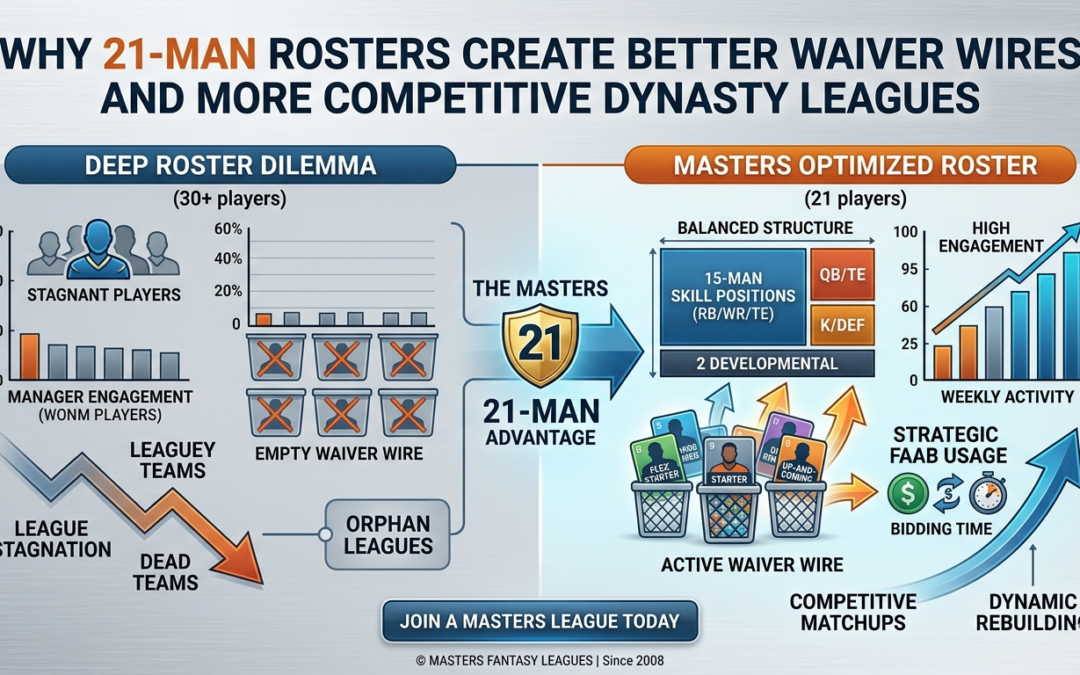
If you’ve played dynasty fantasy football long enough, you’ve seen the “Dead League” syndrome: massive 30+ man rosters, completely empty waiver wires, and half the managers checked out by midseason because they have no path to improve.
At Masters Fantasy Leagues, we made an intentional decision to build our dynasty format around a 21-man roster size. We realize injuries happen and managing through them is part of the game, but the smaller roster size is specifically designed to force tougher, more meaningful decisions.
1. The Math of a “Deep” 21-Man Roster
On the surface, 21 might sound tight, but the composition is carefully balanced for competition. A standard Masters roster is designed for:
1 Kicker and 1 Defense
2 QBs and 2 TEs
5 WRs and 5 RBs
3 Flex positions (WR/RB/TE/QB)
2 Developmental spots
We start six WR/RB/TE players, so having a 15-man core for those positions is actually quite deep. It provides enough room for a solid bench while still ensuring the waiver wire remains a strategic asset. You can see the full breakdown of how these rosters function on our Dynasty Rules Page.
2. Blind Bidding (FAAB) Actually Matters
In many dynasty leagues, FAAB strategy is an afterthought because every player with a pulse is already stashed on a deep bench. In a 21-man format, the player pool is tighter, which changes the game:
Hard Choices: Tighter pools mean you have to make real decisions on who to keep and who to cut.
Strategic Investment: Valuable players actually hit the wire, meaning your FAAB dollars are a legitimate weapon to improve your roster.
Competitive Edge: Timing your bids becomes a skill that separates the sharp managers from the pack.
3. A Waiver Wire That Stays Alive All Season
Think about the impact of expanding rosters by just two spots. If every team in a 12-team league added two IR or roster spots, that would take the top 24 players off the waiver wire. Most managers rarely find a viable target once they are looking at the 25th-best available player. By keeping rosters at 21, the wire stays active with flex-worthy contributors and emerging young players.
4. Preventing the “Orphan” Cycle
One of the biggest hidden dangers of deep rosters is that they make rebuilding almost impossible. When the waiver wire is barren, a struggling team has no way to inject new talent quickly. This leads to stagnant rosters, frustrated managers, and harder-to-fix teams.
Our 21-man format ensures that every team has a path to retool quickly, keeping managers engaged and leagues stable. If you’re ready to test your skills by turning a roster around, check out our current list of available Orphans.
The Bottom Line
Choosing a 21-man roster doesn’t make winning easier—it raises the bar for management. It rewards the active, the strategic, and the forward-thinking. Once you experience a dynasty league where every roster move actually matters, you won’t want to go back to a “dead” wire again.
How This Ties Into The Masters Advantage
The 21-man roster format doesn’t exist in a vacuum — it’s one of the core pieces of what we call The Masters Advantage.
On its own, roster size changes how managers make decisions. But when you combine it with a 3-round rookie draft, an active waiver wire, and constant roster pressure across the league, it becomes something much bigger: a system designed to keep dynasty fantasy football active year-round.
We break this full structure down in our main pillar article, where we explain how all of these settings work together to create nonstop engagement, constant player movement, and a waiver wire that actually matters.